

Technical Analysis Explained: Common Mistakes Traders Must Avoid
Last updated: January 2025
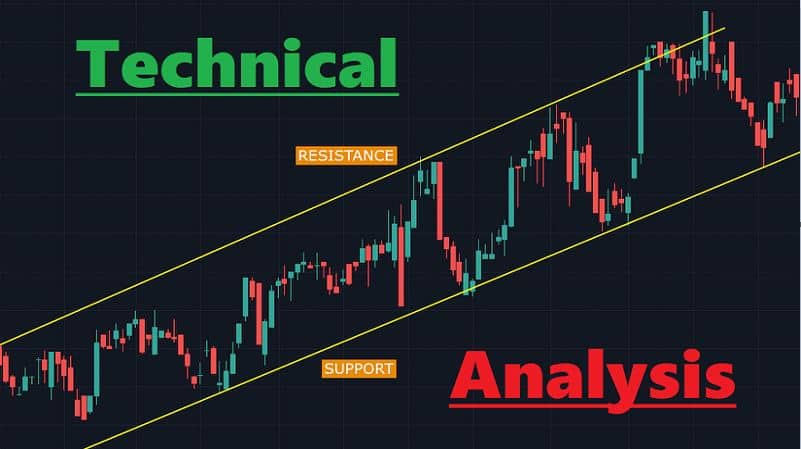
Traders use charts, indicators, and price patterns to understand market movements instead of relying on guesswork. Technical analysis helps identify trends, support and resistance levels, and potential entry or exit points based on price behavior.
This guide explains what technical analysis is, how it works in the Indian stock market, and the common mistakes traders make that often lead to losses.
Technical analysis (TA) is a powerful tool for traders and investors, but even experienced traders can make common mistakes that lead to missed opportunities or losses. In this blog, we’ll highlight the most frequent TA errors and share tips on how to avoid them.
1. Trading against the main trend - The biggest common mistake is trading against the bigger trend. Most traders spend more time on short-term signals while ignoring the trend.
2. Over-Dependence on Single Indicators—Relying too much on a single technical indicator, such as the RSI or MACD, creates a false sense of security. Indicators are not foolproof and tend to give false signals when used in isolation.
3. Failure to Employ Stop-Loss Orders—A common mistake is failing to place stop-loss orders or setting them too wide, leaving the trader vulnerable to risks and enormous losses.
4. Chasing the Market - Entering a trade after observing prices move sharply in one direction is a mistake that most traders make. This is sometimes called "chasing" the market.
5. Overtrading - Overtrading is when a trader enters too many positions, mostly due to a misconception that they should always be in the market. This is sometimes caused by FOMO.
6. Lack of Understanding Market Situation - In most cases, there will be a failure to consider the global situation of the market, market fluctuations, or even current happenings in the world which may greatly influence market moves.
7. Optimistic Over - Optimistic Optimization of Strategies IN excess optimization of technical strategies by looking at historical data has always given a false security blanket. This is generally called "curvefitting," and involves over-optimization by fitting strategies too tightly with past market conditions for failure in real time.
8. Risk-to-Reward Ratios - failing to adequately assess the risk-to-reward ratio of trades leads to poor decision-making. A trade may have a high probability of success but, if the potential reward is not justified by the risk, it should not be undertaken.
9. Ignoring Market Sentiment - Not considering the psychological aspect of trading—market sentiment—is another common pitfall. Prices are often driven by emotions such as fear and greed, not just fundamentals or technical.
10. Lack of consistent Review and Adaptation - Some traders fail to regularly review their trades and adapt their strategies based on performance.
Move Beyond Indicators — Trade with Clarity
Frequently Asked Questions (FAQs) on Technical Analysis
1. What is technical analysis in the Indian stock market?
Technical analysis is a method of studying price charts, patterns, and indicators to predict future market movements. In India, traders use it widely for stocks, Nifty, Bank Nifty, and derivatives trading to identify trends, support-resistance levels, and entry or exit points.
2. Why do most traders fail even after learning technical analysis?
Many traders fail because they misuse indicators, ignore the broader market trend, overtrade, or neglect risk management. Technical analysis works best when combined with discipline, proper stop-loss placement, and realistic risk-to-reward ratios.
3. Which indicators are most reliable for beginners?
Popular indicators like RSI, MACD, moving averages, and volume are commonly used. However, no indicator is 100% reliable. Combining indicators with price action and trend analysis provides stronger confirmation.
4. Is technical analysis enough to make consistent profits?
Technical analysis helps improve probability, but it does not guarantee profits. Consistency depends on risk management, emotional control, and adapting strategies to changing market conditions.
5. What is the biggest mistake traders make in technical analysis?
The biggest mistake is trading against the main trend or over-optimizing strategies based only on historical data. Ignoring market sentiment and failing to review past trades also leads to repeated losses.
6. How can traders improve their technical analysis skills in 2026?
Traders can improve by practicing structured chart reading, maintaining trading journals, focusing on risk-to-reward discipline, and learning real-market application rather than depending solely on indicators.